A Designer's Honest Look at an Autism Awareness Bundle
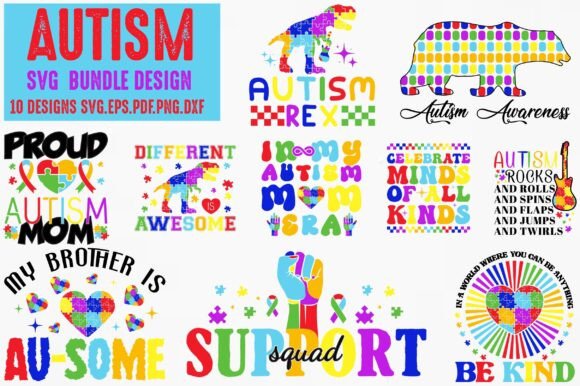
Whenever a bundle like the Autism SVG PNG Graphic Bundle lands in my library, I take a moment before hitting the download button. My first thought isn't about the files, but about the project. As someone who embroiders for clients, for my small shop, and for gifts, I need to visualize that design stitched out—on a real fabric, for a real person. It’s about moving from a digital graphic to a tangible, heartfelt piece.
The Immediate Mood and Where It Belongs
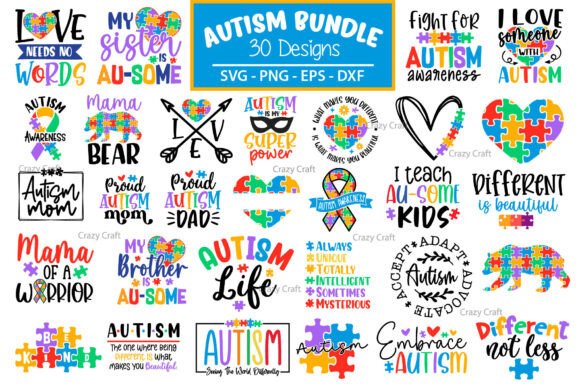
An autism awareness design carries a specific, important mood. It’s about support, recognition, and inclusion. The visual personality of the bundle will dictate its success. Is it gentle and hopeful? Is it bold and declarative? The shape, layout, and level of detail in this bundle will tell me instantly what kind of embroidery project it’s meant for. A simple, clean graphic with clear shapes is a dream for a small, delicate item like a baby’s blanket tag or a pillow cover. A more detailed, layered design might be destined for a statement piece, like the center of a tote bag or a sweatshirt back.
I picture this not as a generic graphic, but as a custom embroidered tote bag for a teacher, or a subtle patch on a child’s backpack. The theme isn’t decorative; it’s meaningful. That means the embroidery needs to be crisp, respectful, and professionally executed. The finished product’s value isn’t just in the stitches, but in the message it carries with clarity and care.
Putting It Through Real Project Scenarios
Let’s walk through a real case. Imagine a client requests a personalized gift for a friend who advocates for autism awareness. They want it on a high-quality cotton apron for a kitchen volunteer. My mind runs through the checklist. How will the Autism SVG PNG Graphic Bundle perform here? On a textured fabric like canvas, fine details can get lost. I’d look at the bundle’s elements: are there tiny lettering or intricate corners that might blur under a satin stitch? Would it need to be scaled up, potentially changing its intimate feel?
For a sweatshirt, the stretchy fabric introduces another variable. A design with large, dense fill stitch areas might pull or pucker without the right stabilizer. Conversely, if the bundle uses more open, running stitch-style outlines, it could be perfect for a lighter garment like a t-shirt or a baby’s polo. For commercial embroidery projects—say, a small batch of caps for a community event—the design must be robust enough to look consistent on every curved surface.
Where This Design Should Be Used With Extra Care
Some applications require a designer’s caution. If the bundle includes very small elements, I’d avoid tiny hoop sizes; the stitch clarity could suffer. Dark fabric backgrounds demand high contrast in the thread color palette; a design with subtle gradients might not translate well. On layered garments like hoodies, or products that need frequent washing like kitchen towels, the embroidery must be durable and not overly dense to prevent stiffness.
This is where practical judgment overrides excitement. A beautiful digital file can become a problematic embroidered piece if not matched correctly to its final home. The design affects customer trust—a poorly executed, blurry patch on a boutique product undermines the entire handmade presentation. For an Etsy seller or digital product seller offering printable mockups, the graphic needs to look equally strong in a black and white preview as it does in color.
The Embroidery Designer’s Practical Notes
Before committing this bundle to any project, my process is non-negotiable. First, I test the design on scrap fabric of the same type I intend to use. This reveals everything: the actual stitch density, how small details like decorative accents hold up, and whether the thread colors I’ve chosen provide the necessary contrast.
- Check the hoop size required for the desired final output size.
- Inspect any potentially problematic areas—tight corners or very thin lines.
- Test the design idea on both light and dark fabric backgrounds in a software mockup.
- Use the proper stabilizer for the fabric texture; this is crucial for graphic clarity.
- Most importantly, confirm the licensing terms for this Crafts graphic. Can I use it for commercial embroidery projects, or only personal gifts? This step is essential for craft business owners and apparel decorators.
These steps bridge the gap between the Graphics category download and the real-world, stitched-out finished product. They turn a digital asset into a reliable, professional design asset.
From Digital File to Handmade Impact
Ultimately, a bundle like the Autism SVG PNG Graphic Bundle succeeds when it transitions seamlessly from screen to stitch. Its visual appeal on a real item—an embroidered patch on a denim jacket, a delicate motif on nursery decor, a bold statement on holiday gift—enhances its purpose. It boosts brand consistency for a small shop that supports certain causes, and it increases the giftability of a personalized product.
For creative entrepreneurs and makers, the professional execution of such a meaningful design directly influences buyer engagement. A clean, well-stitched applique design on a tote bag tells a story of quality and respect. It shows that the maker understood not just the graphic, but the fabric, the machine embroidery design, and the end-user’s connection to it.
My final thought is always this: a good embroidery file is one that you can trust in the hoop. It’s about anticipating how it will look after the machine stops, how the threads lay on the fabric, and how the person receiving that custom apparel or handmade product will feel when they see it. That’s the real project use. That’s the review.