An Honest Review: On the Nice List SVG for Craft & Graphic Designers
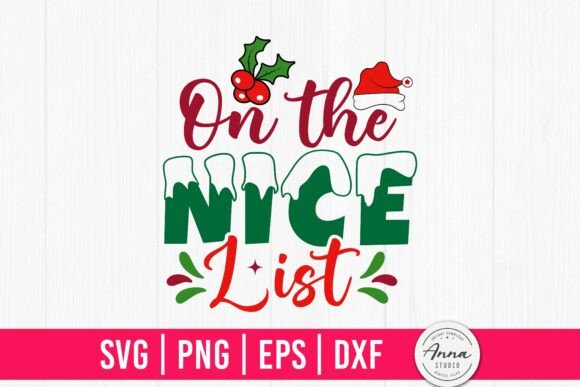
If you’re in the business of selling digital products, you know the drill: a promising new design hits your inbox, and your first job is to evaluate it not just as a piece of art, but as a commercial asset. Today, I’m looking at the On the Nice List SVG—a sublimation-ready digital file bundle for cutting machines. Let’s break down its potential from a seller’s perspective.
First Impressions: Mood and Market Appeal
The immediate vibe of this design is festive and playful, leaning into a cute, seasonal aesthetic. It has a clear niche appeal for holiday-themed products and attracts an audience looking for cheerful, lighthearted graphics. This isn’t a minimalist or rustic design; it’s decorative and geared toward buyers who enjoy traditional holiday motifs. For a seller, this means it slots naturally into seasonal collections on platforms like Etsy or Creative Fabrica, especially around Christmas.
Practical Applications: Turning a Graphic into Products
As a digital product creator, my mind jumps to real product-selling situations. This SVG and its accompanying PNG, DXF, and EPS files are a versatile starting point. I would immediately test it across several formats:
- Sublimation designs for t-shirts, mugs, and tote bags.
- Printable wall art or seasonal greeting cards.
- Cricut projects like planner stickers, scrapbooking elements, or vinyl decals.
- Digital templates for Canva, such as invitation layouts or social media graphics for holiday promotions.
- Product bundles where it could be included as part of a larger Christmas-themed clipart or printable pack.
The key is to see how the design scales and adapts. Its commercial license opens doors for use on print-on-demand merchandise, blog graphics, and even small business packaging during the holiday season.
Testing Before You List: A Seller’s Checklist
Never launch a product based on a thumbnail. Before publishing a listing featuring this asset, I run a series of practical tests.
Product Presentation and Mockup Quality
How does On the Nice List SVG help with product presentation? First, I place it on real mockups. A t-shirt mockup, a mug, a digital wall art frame. This checks visual hierarchy and ensures the design sits well on products. For marketplace thumbnails, I see how it looks when scaled down—does it retain its appeal and clarity? I test it on both white and dark backgrounds to gauge contrast.
This process is crucial for building customer trust. A professional-looking mockup with a clean, well-integrated design increases perceived value and click-through potential. This graphic, with its clear thematic message, could be strong for visual storytelling in a seasonal collection, aiding brand consistency for a holiday-focused shop.
Technical Checks for Commercial Use
Here’s where business-minded realism comes in. I verify the PNG’s transparency is flawless. For the SVG, I inspect the cut lines in my software to ensure they are clean and intact for Silhouette or Cricut projects—no hidden overlaps or stray points that would ruin a physical sticker or shirt. I confirm the resolution is high enough for large format prints if I’m selling printable wall art.
I also think about file organization for the eventual customer. If I’m bundling this with other designs, I ensure each file type is clearly labeled. A messy download frusters buyers and hurts reviews.
Where This Design Asset Works Best
Based on its style, the On the Nice List SVG shines in specific selling scenarios:
- Large product previews on marketplace listings, where its details can be appreciated.
- Themed bundles alongside other Christmas graphics for a cohesive digital download shop.
- Printable products like holiday cards or nursery prints where the playful style fits.
- Merchandise graphics on light-colored apparel or drinkware via sublimation.
- Social media promos for a seasonal business campaign.
- Creative marketplace listings themselves, using the design in promotional visuals.
Its strength is in decorative layouts where the festive mood is the focal point.
Use With Care: Potential Limitations and Risks
Every asset has boundaries. Here’s where I would be cautious with this graphic design asset:
- Tiny sticker details: If scaled down too much for a small sticker, some finer elements might lose definition.
- Overly complex layouts: It might clash or become lost in a crowded, text-heavy template.
- Low-resolution print products: Always verify the output scale for physical goods.
- Crowded thumbnails: If the marketplace listing image has too many competing elements, this design’s impact could diminish.
- Dark backgrounds without adjustment: The original color palette may need tweaking for optimal contrast.
- Products requiring ultra-precise cutting lines: While the SVG is meant for cutting machines, always test a small physical cut first to confirm quality before mass-producing sellable items.
Font Pairing and Design Integration
For added versatility, I experiment with pairing this illustration with different font styles. A classic serif font might give it a more traditional greeting card feel. A clean sans serif could modernize it for a minimalist mug design. A playful script or handwritten font could enhance its cute personality for a blog graphic. This exploration helps me create a wider range of derivative products, like Canva templates or invitation sets, from the single core asset.
Final Thoughts for the Creative Entrepreneur
Evaluating the On the Nice List SVG ultimately comes down to your shop’s direction. For a seller building a holiday-themed inventory on Etsy, a print-on-demand platform, or a digital download shop, this bundle offers a solid, commercially licensed starting point. Its value isn’t just in the single design; it’s in the multitude of products you can generate from it—t-shirt graphics, mug designs, tumbler wraps, digital paper pack accents—which supports a more professional and extensive online product collection.
The realistic approach is to treat it as a raw material. Download it, run the technical and mockup tests, explore its integrations with fonts and other design assets, and confirm its fit within your brand identity. Only then, when you’ve seen it perform in real product-selling simulations, should it earn a place in your published listings. That’s how an experienced digital seller turns a graphic into a business asset.